
E-INVOICING & E-REPORTING IN FRANCE
France isn't just another eInvoicing implementation
The rollout of mandatory eInvoicing and eReporting will take place in phases and will impact both French and foreign companies operating in France. At first glance, this may look like a familiar implementation. In practice, the impact goes much further. It directly affects how your data connects across invoicing, reporting and VAT processes. And whether it remains consistent over time.
The new requirements introduce a level of data and reporting complexity you must not underestimate.
What to expect
- eInvoicing becomes mandatory for domestic B2B transactions
- eReporting obligation for international transactions (sales & purchases) and B2C
- Invoices must be exchanged via certified PA (Accredited Platform)
- Structured formats and real-time invoice status updates become standard (incl. payment data for certain transactions)
Phased implementation
| Phase | Date | Who is affected | What is required |
| Phase 1 | September 1, 2026 | All VAT-taxable businesses established in France (or with a fixed establishment) | Must be able to receive eInvoices. |
| Large and medium sized businesses | Must also issue eInvoices and/or submit eReporting for qualifying transactions. | ||
| Phase 2 | September 1, 2027 | Small and very small businesses | Must issue eInvoices and/or submit eReporting for qualifying transactions. |
| Additional scope | Foreign based companies with a French VAT registration |
In scope for eReporting (different timelines may be applicable). |
Complexity doesn't start in systems, but in data
Most implementations begin with system integration. ERP connections are defined, formats are selected and timelines are set.
That part usually works. The real complexity starts when data needs to move consistently across eInvoicing, eReporting and VAT reporting.
This is where issues begin to surface, because:
-
Data doesn't align across systems
-
eReporting data doesn't reconcile with VAT returns
-
PA validations reject transactions due to missing or inconsistent data
-
Different teams interpret requirements differently
This isn't a technical issue. It's an alignment issue across systems, data and compliance.
Most organizations only discover this once reporting starts. At that point, fixing it becomes significantly more complex.

What's structurally different for France
In many countries, eInvoicing is mainly a transactional process. In France, it also becomes an eReporting and reconciliation challenge.
What's different than previous eInvoicing implementations:
✔️ Transaction data is shared with both trading partners and the tax authority, including lifecycle updates
✔️ eReporting introduces additional datasets and obligations at a different frequency
✔️ Data must remain consistent across B2B, B2C and cross-border flows.
eInvoicing
-
Scope
Domestic transactions between businesses established for VAT purposes in France
No fixed establishment in France = no obligation - Data
Structured invoice per transaction -
Key points
An Accredited Platform, approved by the French tax authority, must be used.
Includes lifecycle status updates.
Payment data reporting.
eReporting
-
Scope
B2C
Cross-border B2B transactions (intra-community supplies and acquisitions, exports) - Data
B2C: Aggregated on daily basis
Cross-border B2B: Detailed and individually, frequency determined by VAT Return period. -
Key point
Includes daily turnover figures, taxable amounts per VAT rate, and corresponding VAT amounts.
Can also include payment data reporting.
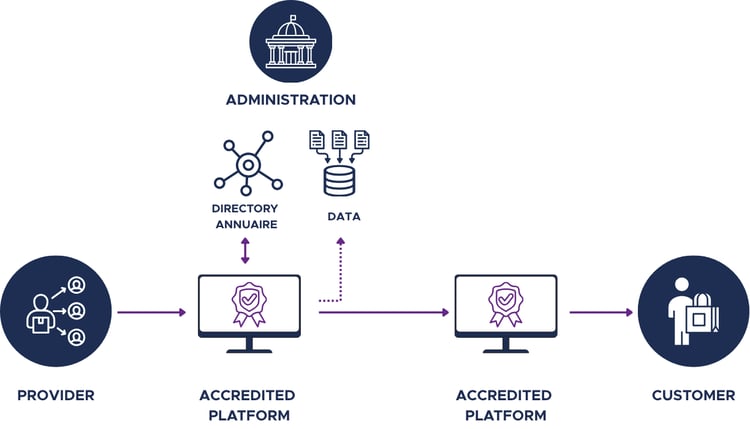
eInvoicing and/or eReporting system in France
The eInvoices are exchanged via accredited platforms (PA), while relevant transaction data is simultaneously shared with the tax authorities for these eInvoices. For the other indicated transactions there is an eReporting obligation.
There's also an obligation to transmit payment data, for transactions covered both by eInvoicing and transactions eReporting. This applies to operations for which VAT is due on payment (services and deposits).
For eInvoices, the information is transmitted through lifecycle status updates.
How this connects to your existing VAT reporting
Your current compliance setup already relies on multiple datasets:
- VAT returns
- EC Sales Lists
- Intrastat
- SAF-T
- Real-time reporting in other countries
- eInvoicing in other countries.
eReporting adds new data flows that need to align with all of them.
As a result, the same underlying data must remain consistent across multiple reporting layers. In practice, this requires a consistent data foundation across all your reporting processes.
What does this mean for your implementation?
Preparing for the French e-invoicing mandate and e-reporting obligations typically involves the following steps.
Start early: implementation for France often takes 20+ weeks, depending on your setup.
Assess your VAT obligations
Determine which French entities, registrations and transactions fall within scope for eInvoicing and eReporting.
Identify your transaction flows
Map domestic B2B, B2C and international B2B transactions, and define which reporting obligations apply to each flow.
Assess your data & system readiness
Check whether required data is available, consistent and accessible across ERP systems, source systems and master data.
Align reporting, data and ownership
Bring eInvoicing, eReporting and VAT reporting together in one consistent process. Ensure data, ownership and reporting flows are aligned from the start.
Select your implementation model and certified partner
Choose the setup and partner that fits your systems, reporting needs and future country rollouts.
NORA as the central control layer in your setup
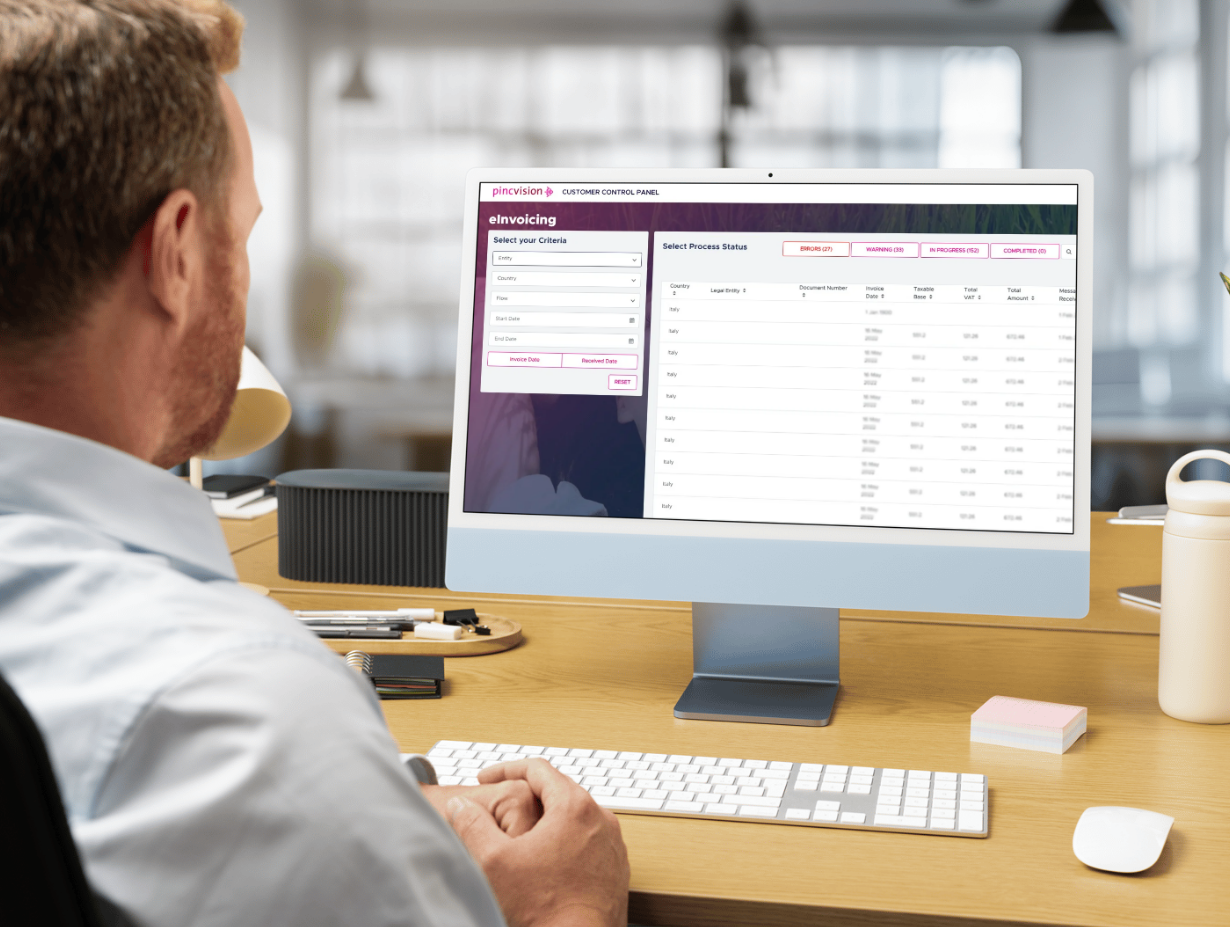
NORA is Pincvision’s eInvoicing & eReporting compliance engine.
At its core, NORA transforms your ERP data into tax-compliant output and ensures it reaches the right platform in the right format.
Unlike many platforms, NORA doesn't just process your data. It helps you improve it and aligns all your VAT data sets. This is especially critical in France, where incomplete or inconsistent data directly leads to rejected transactions, reporting gaps or reconciliation issues.
Whether you work in five countries or fifty, NORA provides one global way of working that scales effortlessly as your footprint grows.
Stay up-to-date with eInvoicing developments in Europe
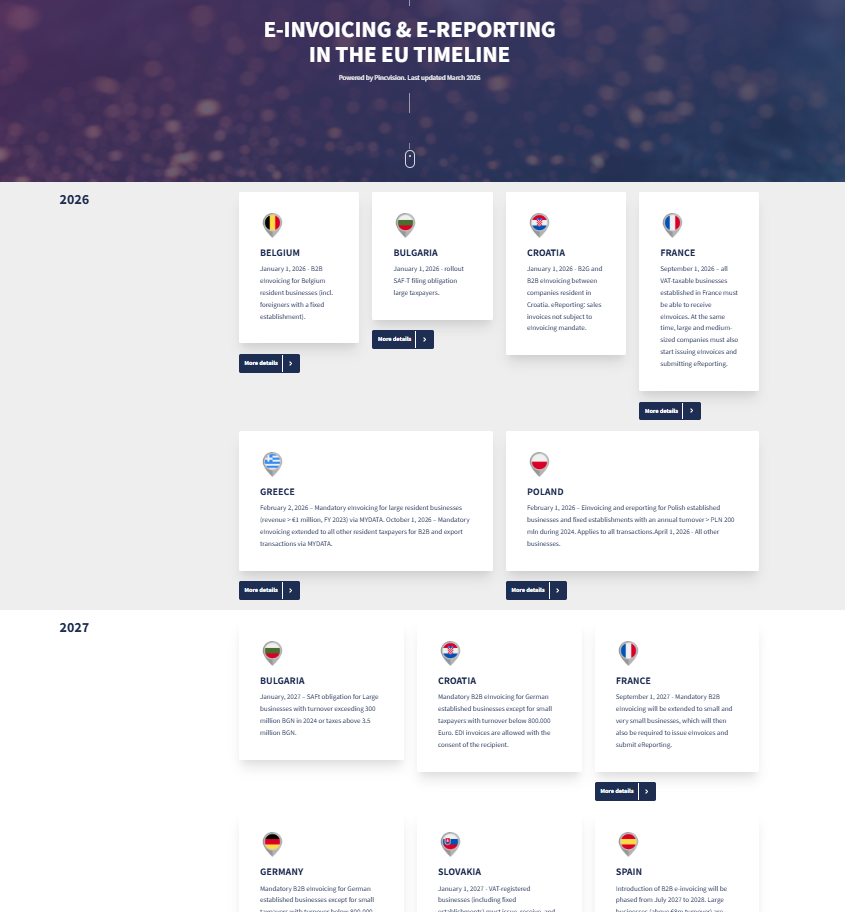
eInvoicing and eReporting regulations and timelines keep changing across EU countries.
➡️ Explore our full EU eInvoicing & eReporting overview.
➡️ Subscribe to receive updates in your mailbox as soon as the timeline changes.
Questions about eInvoicing and eReporting in France?
Every organization starts from a different setup. It's important to know your risks and potential (data) gaps before implementation begins.
Let's meet and discuss your current setup, answer your questions, and give you a clear view of what to expect for your implementation process.
Pick a time that works for you and book your meeting directly in our calendar. No strings attached.